


Comparing a heat pump vs. furnace in Iowa means looking beyond the equipment price. You need a system that can meet your home’s heating needs during cold weather, fit your existing setup and make sense with your utility rates.
Based in Dallas Center, Total Comfort Group provides heating and air conditioning installation, replacement and service across Central Iowa. Here is how an air-source heat pump compares with a gas furnace and where a dual-fuel system fits.
Is a Heat Pump or Furnace Better for Iowa Winters?
Both can heat Iowa homes when properly selected and installed. A cold-climate heat pump provides heating and cooling using electricity. A gas furnace burns fuel to produce heat. The better fit depends on your home’s heating load, equipment performance, utility rates and backup-heating needs.
Key Differences

An air-source heat pump moves heat between the outdoors and your home. It brings heat indoors in winter and removes it in summer. A gas furnace produces heat through combustion and distributes warmed air through ducts. It needs separate equipment for summer cooling.
| Consideration | Air-source heat pump | Gas furnace |
|---|---|---|
| How it heats | Transfers heat from outdoor air into the home | Burns gas to produce heat |
| Energy source | Electricity | Gas for heating, plus electricity for controls and the blower |
| Summer cooling | Provides cooling as well as heating | Requires a separate air conditioner or heat pump |
| Winter selection | Check low-temperature capacity and the backup plan | Check heating output, efficiency and installation requirements |
| Running costs | Depend on electric rates, outdoor conditions and backup use | Depend on gas rates, furnace efficiency and heating demand |
| Existing setup | Ducted and ductless options have different requirements | Gas supply, venting and ductwork need evaluation |
Iowa Winters
Heat pumps are not all designed for the same conditions. Cold-climate models are built for improved low-temperature performance. ENERGY STAR’s cold-climate designation includes heating performance requirements at 5°F. That test point is not a universal temperature at which every heat pump stops working.
Ask how much heat the proposed model can deliver at the winter design temperature used for your location. Its output needs to be compared with your home’s calculated heating demand. Whether backup heat is needed depends on that comparison and the system design.
For more about the installation process, read our heat pump installation guide. A model’s advertising claim alone cannot establish how it will perform in your house.
Dual Fuel
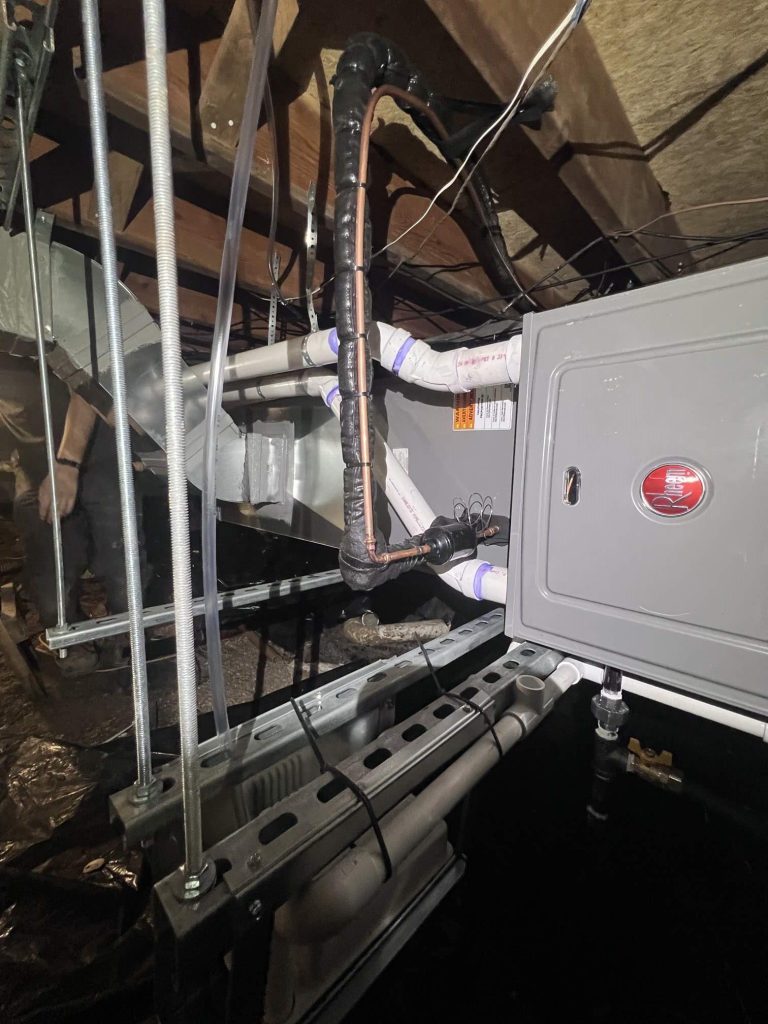
A dual-fuel system combines an electric heat pump with a compatible gas furnace. Controls select which equipment heats the home according to the system’s setup. This can let the heat pump handle part of the season while the furnace provides heat when the controls call for it.
This option is worth discussing when you have a usable furnace and need to replace the central air conditioner. Compatibility, equipment condition and control settings matter. There is no single outdoor changeover temperature that suits every Iowa home.
Cost Factors
Neither system is automatically cheaper to run in every home. Compare your electricity and gas rates with the proposed equipment’s performance. Frequent electric-resistance backup use can change a heat pump’s operating costs. A gas furnace’s fuel use depends on its efficiency and the heat the house needs.
Compare complete installed scopes, too. A heat pump supplies summer cooling, so comparing it only with a furnace price can leave part of the job out. Ask whether each quote includes matching indoor equipment, controls, electrical work, venting changes and any ductwork adjustments.
If you are deciding whether to repair existing equipment first, our furnace repair or replacement guide covers that separate decision. You can also review TCG’s financing information when planning a replacement.
Before Choosing
Bring your recent utility bills and equipment history to the discussion. Describe comfort problems and whether the air conditioner also needs replacement. These details make the comparison more useful than choosing from efficiency ratings alone.
- Heating load: Ask for sizing based on the home’s heating and cooling needs, rather than copying the old unit’s size.
- Low-temperature output: Review the specific heat pump model’s capacity in cold conditions.
- Home condition: Discuss insulation, air leaks and duct problems that could affect either choice.
- Backup plan: Ask what provides heat when the heat pump cannot meet the load.
- Installation scope: Compare equipment, controls and required upgrades on the same basis.
A new system should be chosen for the house it will serve. Correct sizing and installation matter whether you choose a furnace, a heat pump or a combination.
Local Help
Total Comfort Group serves Dallas Center, Des Moines, Waukee and Grimes. Call (515) 471-3333 or request a residential HVAC quote to discuss your existing system and replacement options.
Common Questions
Can a heat pump work below freezing in Iowa?
Yes. Cold-climate heat pumps are designed for low-temperature operation. Whether a particular system can meet your home’s full heating load in the coldest conditions depends on its capacity, sizing and installation. Ask about the backup-heating plan.
Do I have to remove my furnace to install a heat pump?
Not always. A compatible furnace may remain as part of a dual-fuel system. Its condition, the proposed equipment and the controls need to be evaluated before deciding what to keep.
Is a heat pump always cheaper than a gas furnace?
No. Local utility rates, equipment performance and heating demand affect the comparison. Request an estimate based on your home and the specific systems being proposed.
Can I compare a furnace efficiency percentage with a heat pump rating?
Not directly. Furnace AFUE describes seasonal fuel-use efficiency. Heat pump HSPF2 describes seasonal heating performance using a different method. Compare expected energy use and costs rather than treating the numbers as interchangeable.
Who can help compare heating systems in Central Iowa?
Total Comfort Group provides HVAC installation and replacement services from Dallas Center. Call (515) 471-3333 to discuss your heating and cooling needs or request service online.
Equipment guidance: ENERGY STAR air-source heat pumps, cold-climate product criteria and Carrier’s heat pump and furnace comparison.
Compare a heat pump, furnace or dual-fuel setup for your Iowa home. Call (515) 471-3333 or contact Total Comfort Group to discuss HVAC installation and replacement in Central Iowa.